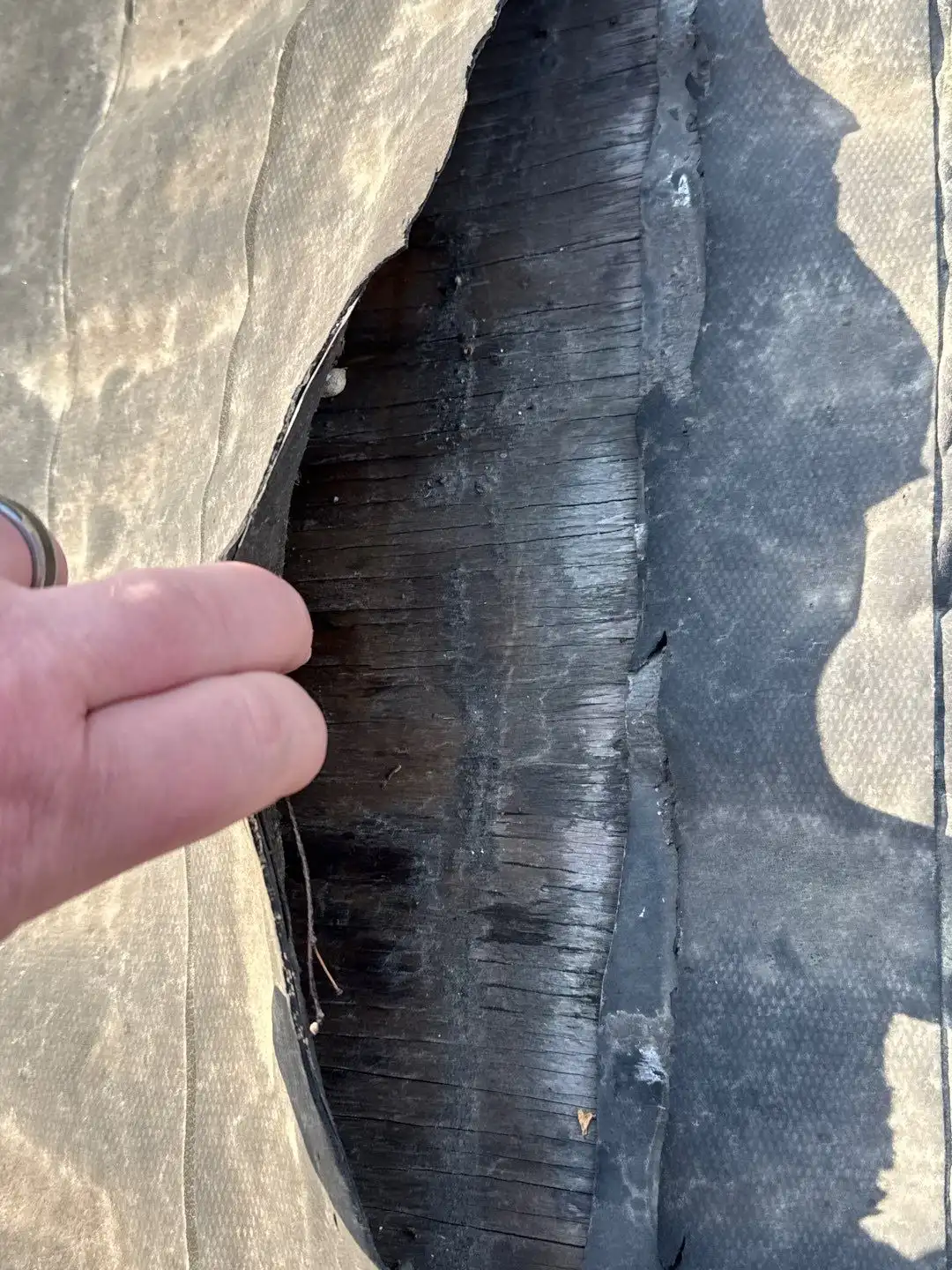
Quick Answer
For most Jamestown commercial properties, a single point leak repair runs between $450 and $2,800 depending on roof type, access, and the size of the wet insulation field. Tarping and temporary dry in is prioritized for active leaks so interior damage stops while the permanent repair is scheduled. Expect a moisture survey, a written scope, and photos before any membrane work begins.
Leak Severity Tiers
How Jamestown Commercial Roofing Categorizes a Commercial Leak
- Tier 1 (Contained Drip): Single ceiling stain, no active drip during dry weather, isolated to one bay.
- Tier 2 (Active Intrusion): Water enters during every rain, multiple ceiling tiles affected, insulation likely saturated.
- Tier 3 (Structural Risk): Decking soft underfoot, sagging ceilings, electrical concerns, or tenant displacement.
Tier 2 and Tier 3 leaks get temporary tarping or shrink wrap dry in first. For hidden moisture tracking, our crews use the same approach described in moisture mapping with thermal imaging to find where the water actually entered versus where it appears inside.
One detail worth flagging for Jamestown property managers: a Tier 1 today can become a Tier 2 after the next freeze thaw cycle. Water that has tracked laterally across a tapered insulation board freezes, expands, and opens the original entry point wider. That is why a single stained tile in November is worth a service call before January, even if nothing is actively dripping.
Interior Damage You Should Not Ignore
- Sagging or stained ceiling tiles (replace, do not just dry)
- Damp insulation above suspended ceilings
- Wet drywall on partition walls below the leak path
- Musty odor in HVAC returns after a rain event
- Rust streaks on bar joists or roof deck fasteners
Saturated building materials in a warm interior can support microbial growth in roughly two days, which is why the 48 hour rule for mold after water damage matters even when the leak feels minor. Drying happens in parallel with the roof repair, not after.
Documentation You Will Receive
- Pre repair roof photos with leak locations annotated
- Moisture survey map if applicable
- Itemized scope of work with material specs
- Post repair photos and water test results
- Workmanship terms in plain language
Common Leak Sources by Roof Type
| Roof System | Most Common Leak Point | Typical Fix |
|---|---|---|
| TPO / PVC | Failed heat welds at seams | Re weld or cover strip |
| EPDM | Shrinkage at flashings | Uncured EPDM patch |
| Modified Bitumen | Blisters and split laps | Torch patch or cold applied |
| Built-Up (BUR) | Ponding and alligatoring | Reinforced flood coat |
| Standing Seam Metal | Fastener back out, sealant fatigue | Butyl tape and screws |
| Asphalt Shingle (low slope) | Step flashing failure | Flashing replacement |
Penetrations and Rooftop Equipment
Across every membrane type above, the single most common leak origin is not the field of the roof. It is the curbs, pipe boots, drains, and HVAC penetrations that interrupt it. On a typical Jamestown commercial roof, we find that 60 to 75 percent of leak calls trace back to one of these four points:
- Pitch pans that were never re filled after the original install
- Pipe boots cracked at the cinch ring from UV exposure
- HVAC curb flashings with separated counterflashing
- Internal drains with deteriorated lead or clamping ring gaskets
Typical Repair Cost Ranges in Jamestown
Variables that push pricing toward the top of each range include rooftop equipment density, lift or crane requirements for access, after hours scheduling around tenant operations, and ballasted systems that require stone removal and replacement to reach the membrane.
The Jamestown Commercial Roofing Leak Response Process
- Phone triage: Severity, building use, and tenant impact determine scheduling priority.
- Site arrival: Crew walks the roof, traces probable entry points, and protects interior contents.
- Dry in: Tarping, shrink wrap, or emergency mastic stops active intrusion.
- Moisture survey: Infrared or capacitance meters map the saturated insulation field.
- Written scope: Photos, measurements, and itemized pricing delivered before any permanent work.
- Permanent repair: Membrane, flashing, or fastener work matched to the existing system.
- Interior coordination: If ceilings, drywall, or insulation got soaked, restoration is sequenced in.
What Property Managers Can Do Before We Arrive
- Move inventory, electronics, and paper files at least six feet from the active drip zone
- Place buckets on plastic sheeting to protect flooring underneath
- Photograph the affected area for your insurance carrier before cleanup
- Shut down power to any light fixtures or outlets showing water staining
- Note the start time of the leak relative to when rain began (this helps locate the entry point)
That last item matters more than people expect. A leak that starts 20 minutes into a rain event usually points to a flashing or seam. A leak that only shows up after several hours of sustained rain typically points to a saturated insulation field that has finally reached capacity, which changes the scope of the repair entirely.
What Triggers a Repair vs Replacement Conversation
Repair Makes Sense When
- The membrane is under 15 years old and otherwise intact
- Wet insulation covers less than roughly 25% of the roof field
- Leak sources are isolated to penetrations or flashings
- Decking is still structurally sound
Replacement Enters the Conversation When
- You are paying for the same area to be patched repeatedly
- Insulation is saturated across multiple bays
- Seam adhesion has failed across more than one slope
- Energy costs have climbed from compromised R-value
If you are weighing the two options, the breakdown in commercial roof restoration vs replacement covers the math most Jamestown property managers run.